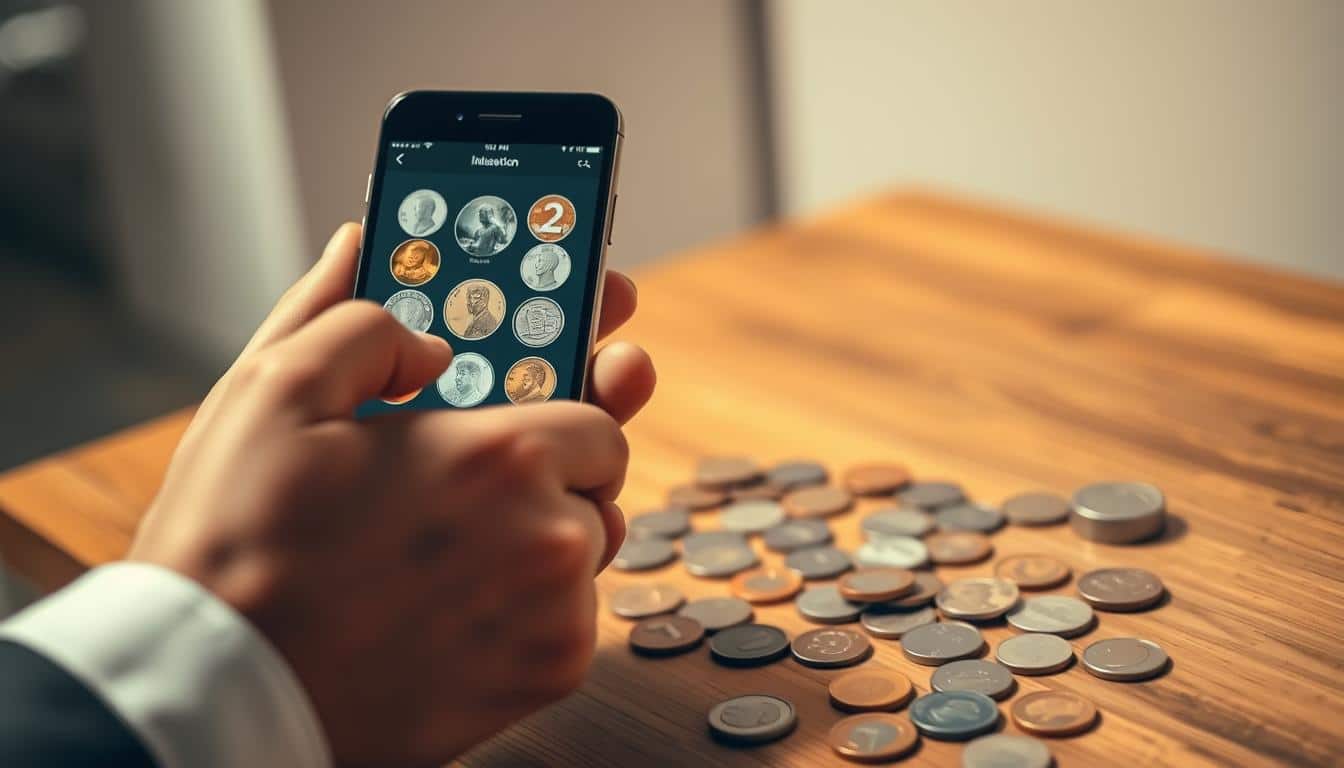

Over 140 million Americans collect coins, yet most can’t accurately identify what’s in their change jar. I learned this in 2015 with a wheat penny from my grandfather’s desk. That single find sent me into the world of numismatics.
That discovery started everything for me. I found myself squinting at mint marks constantly. I googled vague descriptions like “old penny with shield.”
The results? Overwhelming and mostly unhelpful.
A mobile currency scanner changed my entire approach to collecting. Instead of spending hours flipping through reference books, I got answers in seconds. Point your phone’s camera at the currency, and the technology does the work.
This guide breaks down what these scanning tools actually do. I’ll show you which ones deliver real value without charging you. I’m sharing apps I’ve personally tested and mistakes I’ve made.
The numismatic identification process doesn’t have to be frustrating anymore. Some tools genuinely help. Others waste your time.
Key Takeaways
- Modern scanning technology can identify currency in seconds using just your smartphone camera
- Not all numismatic tools are equally accurate—testing multiple options helps you find reliable results
- Personal collections benefit most when you combine digital scanning with traditional reference knowledge
- Download limitations and feature restrictions vary widely among no-cost options
- Inherited collections require patient sorting, and the right tools can save dozens of research hours
- Accurate recognition depends on image quality, lighting conditions, and the currency’s physical condition
What is a Coin Identifier App?
These mobile apps bring coin identification right to your fingertips. They use your camera and a database to identify coins instantly. This technology replaces old reference books and expert knowledge.
I tried one of these apps at an estate sale. I expected poor results. Instead, I got accurate identification within seconds.
The technology combines your smartphone’s camera with extensive coin databases. This creates a free coin recognition tool that anyone can use. The results are surprisingly reliable.
The practical uses go beyond simple curiosity. Maybe you inherited a jar of old coins. Or you picked up something interesting at a yard sale.
These apps serve as your first research tool. They don’t cost a dime. You get immediate answers about your finds.
Understanding the Core Concept
At its foundation, numismatic identification software transforms your phone into a portable coin expert. The purpose is straightforward—democratize coin identification for everyone. You don’t need extensive numismatic training or specialized resources.
Point your camera at a coin and snap a photo. The app analyzes visual characteristics against cataloged examples. Results appear in seconds.
The technology examines diameter, edge type, and design elements. It also reads text inscriptions. Then it matches these features against thousands of known coins.
What makes these apps valuable is their accessibility. You don’t need to understand grading terminology first. You don’t need to know about mint marks either.
The app educates you through the identification process. It explains what makes each coin unique. This happens while it works.
I’ve found this helpful when sorting through mixed collections. Instead of guessing which coins might be valuable, I get immediate information. The learning curve is minimal.
This matters if you’re just getting started with coin collecting. It also helps when you’re trying to discover your coin’s worth after finding something interesting.
Essential Capabilities and Functions
Most coin identification technology includes several core features. These features work together to provide comprehensive information. The primary function is image recognition.
You use your phone’s camera to capture detailed photos. You photograph both sides of a coin. The quality of this recognition has improved dramatically.
Database matching represents the second critical component. Once your photo is captured, the app compares it. It checks against its reference library.
Better apps maintain databases with hundreds of thousands of coins. These include coins from various countries and time periods. The more extensive the database, the better.
Value estimation adds practical utility beyond simple identification. These estimates shouldn’t replace professional appraisals for rare coins. They give you a reasonable range of recent sale prices.
This feature alone has saved me from embarrassing mistakes. I’ve avoided making lowball offers. I’ve also avoided overpaying at coin shows.
| Feature Category | Functionality | User Benefit | Typical Accuracy |
|---|---|---|---|
| Image Recognition | Analyzes coin photos using AI algorithms | Instant visual identification | 85-95% for common coins |
| Database Matching | Compares against cataloged examples | Detailed specifications and history | Depends on database size |
| Value Estimation | References recent market prices | Approximate worth assessment | Within 20-30% range |
| Collection Management | Digital catalog organization | Track and organize finds | User-dependent accuracy |
Collection management tools let you organize identified coins digitally. You can create virtual albums. You can track acquisition dates and maintain records.
Some apps even include offline functionality. I’ve found this surprisingly useful when internet access is limited. You can still identify coins without connectivity.
The historical context feature provides background information. You learn about mintage numbers and composition. You discover the stories behind specific coins.
Advantages for Coin Enthusiasts
The benefits of using a free coin recognition tool extend well beyond convenience. For beginners, these apps remove the intimidation factor. People can explore numismatics without feeling overwhelmed.
You don’t need to memorize coin series. You don’t need to understand complex grading standards. You can identify what you’ve found right away.
Instant identification represents the most obvious advantage. What used to require flipping through reference guides now takes seconds. Posting photos to online forums is no longer necessary.
I remember spending an entire evening trying to identify a worn silver coin. I used books and got nowhere. An app would have solved that mystery in under a minute.
The educational value shouldn’t be underestimated. Each identification provides context about when the coin was minted. You learn its composition and mintage numbers.
You discover why certain variations exist. This information accumulates over time. Your knowledge builds organically rather than through deliberate study.
Key user benefits include:
- Immediate access to identification without requiring specialized knowledge or equipment
- Approximate market values that help inform buying and selling decisions
- Historical background that adds context and interest to each coin
- Digital organization tools that eliminate the need for physical cataloging systems
- Community features connecting you with other collectors and experts
Cost efficiency matters too. Professional coin appraisals can run $50-100 or more. This doesn’t make sense for every coin you encounter.
A free app gives you enough information to decide. You can determine which coins warrant professional evaluation. You can identify which are common pieces worth face value.
The accessibility factor has genuinely democratized coin collecting. Geographic location no longer limits your ability to get information. You’re in a major city with coin shops or a rural area.
Either way, you have the same identification capabilities. Everything you need is on your phone. Distance from dealers doesn’t matter anymore.
Popular Free Coin Identifier Apps
You’ve got more options than ever for the best free coin apps. I’ve tested probably a dozen different programs over the past few years. Most work fine for basic tasks, but a few genuinely surprised me.
The apps I’m covering here represent different approaches to coin identification. One relies heavily on visual recognition technology. Another leans into community expertise.
The third uses real-time AI processing that feels almost futuristic. Each has strengths and weaknesses I discovered through actual use. Here’s what separates the useful tools from the forgettable ones.
Visual Recognition Specialist
Coinoscope built its reputation on photo-based identification. You snap a picture of your coin. The app searches its database for visual matches.
In my testing, this collectible coin app performed best with clear, well-lit photos. I photographed a 1965 Roosevelt dime under my desk lamp. It identified the coin in about three seconds.
Results got mixed with worn specimens or obscure issues. I tried identifying a heavily circulated 1943 steel penny with significant surface damage. The app suggested four different possibilities but couldn’t pin down the exact match.
For standard circulating coins from the past century, it’s solid. The free version includes basic identification and estimated values. Some premium features hide behind a paywall.
Community-Powered Database
Numista takes a completely different approach. Instead of relying purely on automated systems, it harnesses a massive catalog. I use this rare coin identifier constantly because the database is phenomenal.
You can search manually by entering details like country, year, and denomination. Or upload photos and let the community help identify tricky pieces. That second option saved me multiple times.
I had a 1920s French coin that stumped two other apps. Posted it to Numista’s identification forum. Within six hours, three collectors had confirmed it was a 1923 50 centimes piece.
The collection management features impressed me most. You can track what you own, build want lists, and even arrange trades. For a free app, the functionality rivals some paid alternatives.
Foreign coins and older issues represent Numista’s sweet spot. If you’ve inherited a collection with international pieces, this should be your first stop.
Real-Time AI Processing
CoinFlip (sometimes labeled Coin Identifier in app stores) leans heavily on AI-powered recognition. Point your camera at a coin. It attempts identification before you even snap the photo.
I tested this with a 2019 quarter fresh from my pocket change. The app identified it in under two seconds. Same quick results with a 2020 nickel and several state quarters.
Accuracy drops noticeably with older or foreign specimens. A 1964 Kennedy half dollar took three attempts and different angles. An 1880s Morgan dollar completely stumped it.
For quick identification of common U.S. circulation coins, it’s hard to beat. The interface feels responsive and modern. The app includes pricing data pulled from recent sales.
I always cross-reference those values before getting too excited. They tend to run slightly optimistic compared to what you’d actually get.
| App Name | Primary Strength | Best Use Case | Identification Speed |
|---|---|---|---|
| Coinoscope | Photo-based visual matching | Modern circulating coins | 3-5 seconds |
| Numista | Community-built database | Foreign and historical coins | Manual search or community assistance |
| CoinFlip | Real-time AI recognition | Quick U.S. coin identification | Under 2 seconds |
Each app fills a specific niche in coin identification. I keep all three installed because they complement each other’s weaknesses.
Your choice depends on what you’re identifying most often. Lots of foreign coins? Go with Numista.
Need speed for modern U.S. currency? CoinFlip delivers. Want solid all-around performance with photo identification?
The beauty of free apps is you can test all three. Download them, try your most challenging coins, and see which interface clicks.
How a Coin Identifier App Works
Each time you photograph a coin with your phone, you trigger technological processes most users never consider. The app analyzes dozens of visual elements at once. It compares them against massive databases.
I’ve tested these apps enough to appreciate the sophisticated engineering behind the simple interface. The whole process typically takes just a few seconds. Quite a bit happens in that brief window.
Visual Analysis Through Advanced Algorithms
Coin scanning technology relies on computer vision algorithms that break down your photograph into analyzable data. The app examines specific characteristics that make each coin unique. This happens immediately after you snap that picture.
The software focuses on several key visual elements:
- Diameter measurements and overall size proportions
- Edge design patterns including reeding, lettering, or smooth edges
- Relief details showing how raised or recessed various design elements are
- Text placement, font style, and any inscriptions
- Central imagery including portraits, symbols, or emblems
Image recognition coins systems use machine learning models trained on thousands of coin photographs. Sometimes they’re trained on millions. These models recognize patterns like you might spot your friend in a crowd.
The algorithms process and compare far more variables than human eyes can track simultaneously. I’ve discovered through trial and error that lighting makes a massive difference in accuracy. A coin photographed under harsh overhead lighting might create shadows that confuse the algorithm.
Diffused natural light or even lighting from multiple angles produces cleaner results almost every time.
The angle at which you photograph your coin can mean the difference between instant identification and complete failure to recognize even common coins.
Straight-on shots work best because they minimize distortion. Angled photos might make a round coin appear oval. This throws off diameter calculations and pattern matching.
Combining Manual Input With Database Search
Most apps don’t rely exclusively on visual recognition. They give you options to manually narrow down possibilities before or after scanning. This significantly improves accuracy for digital coin valuation purposes.
You can typically filter by country of origin, historical era, or denomination. Material composition is another filter option. This helps when automatic recognition struggles with worn coins or unusual specimens.
I always start with these filters for heavily circulated coins. The visual details might be too degraded for pure photo recognition. This makes manual filtering more reliable.
The database matching process happens behind the scenes. Your app searches through its catalog looking for matches. Basic apps have 50,000 entries while comprehensive ones have several million.
The search looks for coins matching both the visual analysis and your input parameters. I really appreciate when apps show confidence scores alongside their results. Instead of declaring “This is a 1943 wheat penny,” they might say “87% confident.”
That percentage tells me whether I should trust the identification or keep investigating. The best apps present multiple possible matches rather than forcing a single answer. Your actual coin might be the second or third option.
This happens especially if it has unusual wear patterns or environmental damage.
Connection Requirements and Processing Power
The offline versus online debate matters more than most people realize. Each approach has distinct advantages depending on your situation.
| Feature | Online Apps | Offline Apps |
|---|---|---|
| Database Size | Extensive (millions of coins) | Limited (thousands locally stored) |
| Processing Power | Cloud servers handle heavy computation | Your phone’s processor does all the work |
| Internet Required | Yes, stable connection needed | No, works anywhere |
| Identification Speed | Slower (network dependent) | Faster (no upload time) |
| Accuracy Level | Higher for unusual coins | Lower with rare specimens |
Online apps leverage cloud computing and massive databases. This makes them better at identifying obscure coins. They also provide detailed digital coin valuation information.
They can access constantly updated pricing data and newly cataloged specimens. The downside? You need reliable internet connectivity.
I’ve been at outdoor coin shows or estate sales in rural areas. Cell service is spotty at best there. Online apps become completely useless in those situations.
Offline apps store their database directly on your device. They run all recognition algorithms locally. This means they work anywhere—no WiFi required.
The tradeoff is reduced accuracy, especially with unusual or foreign coins. These might not be in the limited local database.
I keep both types installed on my phone now. My primary app is online-based for its superior accuracy. It offers comprehensive information.
I also maintain an offline app specifically for situations without internet access. This includes flea markets, basement cleanouts, or remote antique shops. I might stumble across interesting finds in these places.
Key Statistics on Coin Identification
I’ve watched the coin identification landscape transform. The statistics confirm what many have observed firsthand. The shift from traditional reference books to mobile apps has changed everything.
This change hasn’t just altered how people identify coins. It’s fundamentally changed who participates in the hobby. Proprietary app data remains closely guarded by developers.
Broader coin collecting statistics and industry surveys reveal clear patterns. Anyone in the numismatic community can recognize these trends. The numbers tell an important story.
We’re seeing demographic shifts and new identification patterns. Usage behaviors would’ve seemed impossible just a decade ago.
Who’s Actually Using These Apps
The traditional coin collector stereotype isn’t entirely wrong. It’s just increasingly incomplete. Free numismatic database apps have dramatically broadened participation.
Serious coin collecting used to skew toward collectors aged 50 and above. That demographic still exists and remains passionate. Mobile apps have brought in substantial numbers from younger age groups.
The 25-45 age bracket shows the most notable growth. This appears in observations at coin shows and online communities.
Many users don’t consider themselves “collectors” at all. Someone cleaning out a relative’s estate finds old coins. They want immediate answers.
A cashier receives an unusual foreign coin during their shift. They snap a quick photo during their break. A parent discovers their childhood collection and wonders about its value.
These casual users represent a significant portion of app activity. They’re not building comprehensive collections or studying numismatic history. They just need to identify something specific.
Mobile technology has made that possible without prior knowledge. No commitment to the hobby is required.
The Coins Everyone Wants Identified
The most commonly identified coins reflect what actually circulates. They also reflect what people inherit and what seems potentially valuable. Certain coin types dominate identification requests.
U.S. wheat pennies (1909-1958) are probably the most-scanned coin type. They’re common enough that almost everyone encounters them eventually. They’re old enough to seem like they might be worth something.
The distinctive wheat stalk reverse design is recognizable. Even people with zero numismatic knowledge can spot it.
State quarters from the 1999-2008 program generate constant identification requests. Many people collected these when they were new. Newcomers frequently wonder if their sets have significant value.
The answer usually disappoints them. But the question gets asked repeatedly.
Classic U.S. designs also see heavy scanning activity:
- Mercury dimes (1916-1945) – elegant design that looks valuable
- Buffalo nickels (1913-1938) – distinctive and often worn smooth
- Walking Liberty half dollars (1916-1947) – less common in circulation, which raises curiosity
- Indian Head pennies (1859-1909) – old enough to seem rare
Common circulation coins from major economies dominate international searches. British pounds, Euro coins from various countries, and Canadian dollars appear frequently. These are usually brought back from travel or received near border areas.
What people don’t scan as often tells its own story. Truly rare coins seldom appear in casual identification requests. People who own genuinely valuable pieces usually already know what they have.
The identification apps primarily serve the vast middle ground. They help identify interesting but common coins.
How Usage Patterns Have Evolved
Numismatic trends in app usage show steady growth overall. Interesting spikes and patterns reflect broader cultural moments. Usage isn’t evenly distributed throughout the year.
It follows predictable rhythms tied to human behavior and news cycles.
Holiday periods generate noticeable increases in identification requests. Christmas and birthdays are particularly busy times. Coins given as gifts or discovered while visiting family prompt immediate curiosity.
Someone receives a coin collection from a grandparent. They want to know what they’ve got.
Major numismatic news creates dramatic but temporary surges. A rare coin sells for millions at auction and makes mainstream headlines. App downloads jump significantly.
People wonder if they might have something similar tucked away. These spikes typically last a few weeks before settling back.
The COVID-19 pandemic created an unexpected and sustained boost in usage. People stuck at home during 2020-2021 lockdowns went through storage spaces. Old collections forgotten for years suddenly resurfaced.
People had time to investigate what they’d found.
That pandemic surge hasn’t entirely receded. Many users who discovered coins during lockdown developed genuine interest. They moved from casual identification to active participation in online communities.
Some even attended coin shows once restrictions lifted.
Looking at longer-term numismatic trends, mobile apps have accelerated a generational shift. Younger participants entering the hobby almost universally start with digital tools. This isn’t necessarily replacing traditional collecting.
Many eventually acquire physical reference books. But the entry point has fundamentally changed.
The data also suggests geographic patterns. Higher usage appears in areas with established coin dealer networks. Active collecting communities show increased app usage.
Apps haven’t eliminated the importance of physical infrastructure. They’ve made it more accessible by helping newcomers understand their coins. This happens before visiting a dealer.
Advantages of Using a Free Coin Identifier App
Using coin identifier apps regularly brings several major benefits. These free coin tools deliver value beyond simple identification. They reshape your entire collecting experience in exciting new ways.
The advantages hit you immediately once you integrate these apps. Traditional methods required time, money, and physical resources many collectors couldn’t access. Digital solutions changed that equation completely.
Saving Money Without Sacrificing Quality
Cost efficiency stands out as the most obvious advantage. Traditional coin identification required significant financial investment upfront. Reference books like the Red Book and grading guides collectively cost hundreds of dollars.
Professional appraisals run between $50 and $150 per hour. That adds up fast with inherited collections or multiple pieces. Free apps give you instant baseline identification and values without spending anything.
They’re not as comprehensive as a $500 reference library. But for 95% of what casual collectors encounter, they’re more than adequate. I still own reference books, but I reach for my phone first.
The savings extend beyond initial costs. You avoid buying wrong coins at inflated prices. That alone has saved me from several expensive mistakes at antique shops.
Identification That Goes Everywhere
Accessibility and convenience transformed how I interact with mobile numismatics entirely. Finding a coin at a garage sale? Identify it on the spot before deciding whether to buy.
The apps go everywhere your phone goes. That means numismatic knowledge is always available, regardless of location or time. I’ve identified coins while traveling internationally and at late-night hours.
Coin collection management features deserve more credit than they typically get. Digital cataloging beats traditional spreadsheets or handwritten notebooks. Here’s what modern apps let you do:
- Photograph each coin and store images alongside denomination, year, and grade estimates
- Track values over time to monitor portfolio growth
- Flag coins you want to sell or pieces you’re still hunting
- Sync catalogs across devices for access on both phone and tablet
- Export collection data for insurance or estate planning purposes
This organizational capability turns casual collecting into systematic portfolio management. You know exactly what you own, what you paid, and what it’s worth. That clarity makes better collecting decisions possible.
Connecting With Fellow Collectors
Community engagement adds an unexpected dimension that traditional methods never offered. Many apps include forums, chat features, or trading platforms. The collective knowledge available through these networks is remarkable.
I’ve learned more from community discussions than from any formal guide. Real collectors share what worked, what didn’t, and what to watch out for. The advice comes from genuine experience rather than theory.
The ability to ask “can anyone identify this?” is genuinely valuable. This proves especially helpful for unusual or damaged coins. Within hours, someone usually provides the information you need.
Trading and selling features connect buyers and sellers without middleman fees. Some collectors have built entire networks through these apps. The social aspect turned a solitary hobby into a collaborative experience.
These advantages compound over time. The money saved, convenience gained, and connections made add up significantly. You’re not just identifying coins—you’re participating in a connected community.
Limitations of Free Coin Identifier Apps
Free coin identifier apps aren’t perfect tools. Understanding their shortcomings helps you use them more effectively. I’ve used these apps for years, and they still have significant gaps.
Knowing these free app drawbacks before you start prevents frustration and costly mistakes. Every technology has boundaries. Free coin identification tools work wonderfully in certain situations and fall short in others.
Accuracy of Identification
The coin app accuracy varies wildly depending on several factors. Modern coins in excellent condition usually get identified correctly. Worn coins from the 1800s are where things get tricky.
I’ve had apps confidently misidentify damaged coins. The algorithm sees surface details but can’t assess metal composition or weight. This creates a significant blind spot for counterfeits.
Treat app identifications as starting points rather than definitive answers. I verify through multiple sources before getting excited about valuable coins. Apps sometimes fail to recognize legitimate rare varieties.
| Coin Condition | Recognition Accuracy | Common Issues | Reliability Rating |
|---|---|---|---|
| Uncirculated Modern | 85-95% | Minimal errors, clear details | High |
| Circulated Modern | 70-85% | Wear patterns may confuse algorithms | Moderate |
| Well-Worn Vintage | 40-60% | Missing details, surface damage | Low |
| Ancient/Damaged | 20-40% | Severe wear, corrosion, incomplete features | Very Low |
The identification limitations become especially apparent with error coins and varieties. These coins have subtle differences that even experienced collectors struggle to identify. Apps looking at surface images alone rarely catch doubled dies or repunched mint marks.
Image recognition technology can only work with what it sees. Without the ability to measure weight or test metal composition, apps have accuracy limitations. They can’t match physical examination by experts.
Database Limitations
Free apps generally have smaller databases than paid services or professional references. This creates frustrating gaps in coverage. I’ve encountered ancient coins and regional tokens that returned zero matches.
The databases also vary in how current they are. Newly released coins might not appear for months or even years. I always check coin ID app reviews for comments about database completeness.
Here are common database gaps I’ve encountered:
- Obscure foreign coins from smaller nations
- Ancient and medieval coins beyond major empires
- Modern commemoratives issued in limited quantities
- Error varieties and doubled dies
- Regional tokens and exonumia
Value estimates in free apps tend to pull from limited sources. They often lag behind actual market prices. A coin that recently gained collector interest might still show outdated values.
There are literally millions of coin varieties worldwide. Building a comprehensive database requires enormous resources. A “no match” result doesn’t mean your coin is worthless or unidentifiable.
In-App Advertisements
In-app advertisements are the price of “free.” Developers need revenue to maintain and improve their apps. But some implementations are so intrusive they significantly diminish the user experience.
You’re trying to scan a coin, and suddenly there’s a 30-second video ad. Others place banner ads that partially obscure the interface. I’ve accidentally clicked ads more times than I can count.
The worst offenders require you to watch ads to unlock basic features. Want to see the full identification details? Watch an ad. This interrupts the natural workflow.
Some apps offer ad-free versions through subscription or one-time purchase. If you use the app frequently, this might be worth it. I’ve paid for ad removal on my primary coin app.
Light, non-intrusive banner ads are an acceptable trade-off for free functionality. Constant pop-ups and forced video ads make me look for alternatives. The coin app accuracy doesn’t matter if the ads make the app unusable.
How to Choose the Right Coin Identifier App
I’ve tested enough coin apps to know that choosing the right one isn’t about picking the most popular. It’s about matching features to your specific needs. The best coin identifier for ancient Roman coins differs from the ideal app for U.S. state quarters.
Understanding what you actually need saves hours of frustration and deleted apps. Think about your primary use case before downloading anything. Will you identify coins occasionally or daily?
Do you need offline functionality for shows and flea markets where cell service is spotty? Is community interaction important, or do you prefer working independently? Your collecting focus matters more than you’d think.
An app excellent for modern U.S. coins might completely fail with world currency or ancients.
What Matters When Selecting an App
Selection criteria should start with the basics—what coins you’ll actually be identifying. I prioritize apps with large, regularly updated databases. I encounter everything from colonial coppers to modern commemoratives.
Someone with a narrower focus might prioritize depth over breadth. Database size tells you coverage but not quality. I’ve used apps claiming millions of coins that couldn’t identify common varieties.
Smaller specialized databases nailed obscure details. Look for apps that specifically mention your collecting area—ancient coins, world currency, or error coins.
Technical comfort level influences your experience significantly. Some apps offer complex interfaces with manual search options and variety databases. Others intentionally simplify everything to photo-and-identify.
Advertisement tolerance varies by person. Free apps fund themselves through ads. The implementation ranges from occasional banners to intrusive full-screen interruptions.
I’ll accept reasonable advertising for a quality free app. Constant interruptions make me delete apps quickly.
- Database coverage matching your collecting focus
- Offline functionality if you identify coins away from WiFi
- Collection management features for organization
- Recent updates indicating active development
- Interface complexity matching your technical comfort
Testing Apps Side by Side
Real app comparison requires actually installing multiple options and running identical tests. I keep three or four apps installed simultaneously. I photograph the same coin with each one.
The differences reveal themselves immediately—one app identifies correctly while another misses completely. Check database size in app descriptions, but verify through testing. An app claiming comprehensive coverage should handle both common and unusual coins.
I test with a mix—something extremely common like a Lincoln cent and something moderately scarce. I also test something obscure.
Identification methods vary significantly between apps. Automatic image recognition works great when it works, but manual search options provide backup. The best coin identifier apps offer both approaches rather than forcing you into one method.
| Feature Category | High Priority | Medium Priority | Lower Priority |
|---|---|---|---|
| Database Coverage | Matches collecting focus exactly | Broad general coverage | Limited to specific regions |
| Identification Method | Multiple options available | Image recognition only | Manual search only |
| Offline Function | Full offline capability | Partial offline access | Online connection required |
| Update Frequency | Updated within 3 months | Updated within year | No recent updates |
Value sources matter if you care about pricing. Apps pull value data from different sources—some use auction results, others use price guides. Some combine multiple sources.
Understanding where pricing comes from helps you evaluate whether the estimates match your market.
Collection management capabilities range from basic lists to comprehensive inventory systems. Features include photos, purchase prices, and current values. If you’re building a serious collection, these features save enormous time compared to spreadsheets or notebooks.
Learning from Other Users’ Experiences
User reviews reveal problems you won’t discover until you’ve invested time learning an app. I read both positive and negative reviews, looking for patterns rather than individual complaints. Multiple reviews mentioning crashes or incorrect identifications indicate real issues.
Recent reviews matter more than old ones. An app might have been excellent two years ago but declined after redesigns. Developers might have stopped maintaining it.
I focus on reviews from the past few months to understand current performance rather than historical reputation.
Reviews from users with similar collecting interests provide the most relevant insights. Someone identifying ancient Roman coins experiences the app differently than someone working with modern U.S. currency. Look for reviewers who mention coins similar to what you collect.
Developer responses to reviews indicate ongoing support. Apps where developers actively respond to feedback are being maintained and improved. Radio silence from developers often precedes app abandonment—something to avoid when selecting tools you’ll rely on regularly.
Future Predictions for Coin Identifier Apps
I’ve watched the coin app space evolve over the past few years. The pace of innovation suggests we’re about to see game-changing developments. The technology is advancing faster than I initially expected.
The next few years should bring significant improvements. These changes will transform how we interact with our collections. Future coin technology will reshape the entire hobby.
What excites me most is how these tools will democratize expertise. Features that previously required professional numismatists will become accessible to anyone with a smartphone.
Advanced Technology Integration
Emerging technologies will likely center on enhanced AI and machine learning models that address current limitations. Most apps struggle with worn or damaged coins. They rely heavily on clear visual features.
That’s frustrating when you’re dealing with circulation finds or historic pieces. Next-generation algorithms should better handle degraded specimens by recognizing subtle details. Instead of matching against pristine examples, AI coin identification systems will compare wear patterns.
I expect integration of 3D scanning technology as phone cameras improve. Multiple lenses working together could analyze coins from several angles simultaneously. This captures edge details and relief depth.
This provides exponentially more data points for identification than a flat image ever could. Augmented reality overlays could show you information about a coin in real-time. Just point your phone and learn.
Some higher-end apps might incorporate spectroscopy using specialized phone attachments. This would analyze metal composition. It helps detect counterfeits more reliably.
Next-Generation Features on the Horizon
Based on current development trajectories, I’m anticipating several breakthrough features. These will redefine what these apps can do:
- AI-powered grade estimation trained on thousands of professionally graded coins, providing instant condition assessments
- Blockchain integration for provenance tracking and authentication, creating permanent ownership records
- Enhanced community features with live identification assistance from expert numismatists
- Predictive pricing algorithms that forecast value trends based on historical market data
- Direct marketplace integration allowing seamless buying and selling through auction platforms
What I’m particularly interested in is apps that might offer chemical composition analysis. This could work through phone sensors or attachments. Being able to verify silver content without destructive testing would be incredibly useful.
That’s the kind of feature that bridges the gap between casual collecting and serious investment. The evolution of AI coin identification will likely include neural networks that learn from user corrections. Each misidentification that gets manually corrected improves the system for everyone.
Market Evolution and Industry Shifts
Market growth and numismatic technology trends point toward both consolidation and specialization. These seemingly contradictory forces will reshape the app landscape. The coin app market currently has dozens of similar offerings with overlapping features.
I expect we’ll see consolidation as larger platforms acquire smaller apps. They’ll integrate their best features. The strongest players with superior technology and proper funding will dominate.
Simultaneously, specialized apps focusing on specific niches should emerge. These will serve collectors with focused interests—ancient coins, error coins, world coins by region.
The overall market will grow as younger collectors enter the hobby through accessible mobile tools. Millennials and Gen Z expect smartphone solutions for everything. Apps lower the barrier to entry significantly compared to traditional reference books.
I also predict increased monetization through subscription models rather than one-time purchases. Monthly fees provide developers with sustainable revenue for ongoing improvements. They also create long-term costs for users.
The positive aspect is that serious developers with better technology are entering the space. This should result in genuinely superior tools.
Future coin technology will likely integrate with broader collecting ecosystems. Imagine apps that connect your coin collection with insurance platforms and estate planning services. That level of integration transforms a hobby tool into a comprehensive asset management system.
The trajectory is clear. These apps are evolving from simple identification tools into sophisticated platforms. They will support every aspect of numismatic collecting.
Frequently Asked Questions
These coin app FAQs come up constantly in collector communities. I’ll address the most common identification questions based on my testing experience.
Accuracy Levels You Can Expect
For modern coins in decent condition, I’ve seen 85-95% accuracy with most apps. A 2015 Lincoln penny or 2020 Euro gets identified correctly almost every time.
Accuracy drops significantly with worn coins or obscure varieties. Sometimes it falls to 50% with heavily circulated 19th-century pieces. The technology reads visual appearance, not authenticity markers like weight or metal composition.
I always verify valuable identifications through multiple sources before making collection decisions.
Foreign Coin Recognition
Yes, you can identify coins from many countries. Major apps cover circulation coins from Europe, North America, Asia, and Australia particularly well. I’ve had excellent results with Canadian, British, German, and Japanese currencies.
Coins from smaller nations or defunct political entities have spottier database coverage. Apps specializing in specific regions often provide better coin app help than general-purpose options.
Troubleshooting Unrecognized Coins
Start by improving your photo—better lighting, cleaner surface, different angles. I’ve had coins that failed identification work perfectly after gentle cleaning and photographing in natural sunlight.
Try manual search features where you input country, denomination, and year. Community forums within apps connect you with experienced collectors who identify what algorithms miss. Cross-reference with other apps since databases vary considerably.